Sunday, September 9, 2012

Germany: Day 9


This was taken from: http://www.ushmm.org/wlc/en/article.php?ModuleId=10005214 
 Established in March 1933, the Dachau concentration camp was the first regular concentration camp established by the National Socialist (Nazi) government. Heinrich Himmler, in his capacity as police president of Munich, officially described the camp as "the first concentration camp for political prisoners." It was located on the grounds of an abandoned munitions factory near the northeastern part of the town of Dachau, about 10 miles northwest of Munich in southern Germany.
During the first year, the camp held about 4,800 prisoners. Initially the internees consisted primarily of German Communists, Social Democrats, trade unionists, and other political opponents of the Nazi regime. Over time, other groups were also interned at Dachau, such as Jehovah's Witnesses, Roma (Gypsies), homosexuals, as well as "asocials" and repeat criminal offenders. During the early years relatively few Jews were interned in Dachau and then usually because they belonged to one of the above groups or had completed prison sentences after being convicted for violating the Nuremberg Laws of 1935.
In early 1937, the SS, using prisoner labor, initiated construction of a large complex of buildings on the grounds of the original camp. Prisoners were forced to do this work, starting with the destruction of the old munitions factory, under terrible conditions. The construction was officially completed in mid-August 1938 and the camp remained essentially unchanged until 1945. Dachau thus remained in operation for the entire period of the Third Reich.
The number of Jewish prisoners at Dachau rose with the increased persecution of Jews and on November 10-11, 1938, in the aftermath of Kristallnacht, more than 10,000 Jewish men were interned there. (Most of men in this group were released after incarceration of a few weeks to a few months, many after proving they had made arrangements to emigrate from Germany.)
The Dachau camp was a training center for SS concentration camp guards, and the camp's organization and routine became the model for all Nazi concentration camps. The camp was divided into two sections--the camp area and the crematoria area. The camp area consisted of 32 barracks, including one for clergy imprisoned for opposing the Nazi regime and one reserved for medical experiments. The camp administration was located in the gatehouse at the main entrance. The camp area had a group of support buildings, containing the kitchen, laundry, showers, and workshops, as well as a prison block (Bunker). The courtyard between the prison and the central kitchen was used for the summary execution of prisoners. An electrified barbed-wire fence, a ditch, and a wall with seven guard towers surrounded the camp.
In 1942, the crematorium area was constructed next to the main camp. It included the old crematorium and the new crematorium (Barrack X) with a gas chamber. There is no credible evidence that the gas chamber in Barrack X was used to murder human beings. Instead, prisoners underwent "selection"; those who were judged too sick or weak to continue working were sent to the Hartheim "euthanasia" killing center near Linz, Austria. Several thousand Dachau prisoners were murdered at Hartheim. Further, the SS used the firing range and the gallows in the crematoria area as killing sites for prisoners.
In Dachau, as in other Nazi camps, German physicians performed medical experiments on prisoners, including high-altitude experiments using a decompression chamber, malaria and tuberculosis experiments, hypothermia experiments, and experiments testing new medications. Prisoners were also forced to test methods of making seawater potable and of halting excessive bleeding. Hundreds of prisoners died or were permanently disabled as a result of these experiments.
Dachau prisoners were used as forced laborers. At first, they were employed in the operation of the camp, in various construction projects, and in small handicraft industries established in the camp. Prisoners built roads, worked in gravel pits, and drained marshes. During the war, forced labor utilizing concentration camp prisoners became increasingly important to German armaments production.


 The German police use this part of the camp today...

 Watch Tower

 Liberated by the US
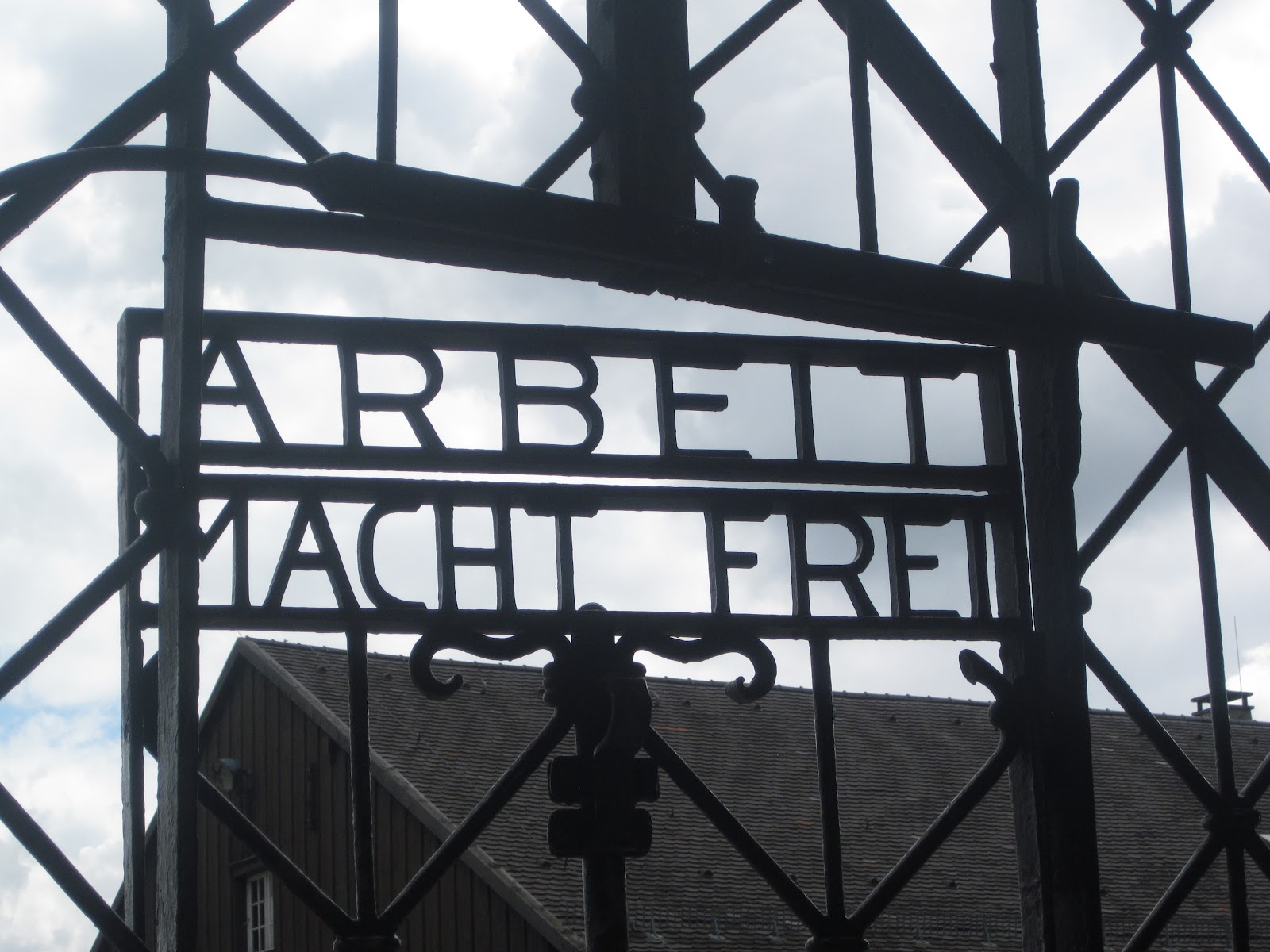
 The Entrance to the camp

 The barracks (well, most of the camp) was burned down to hid all Nazi evidence after the war. They have reconstructed some buildings. Barracks like this would have filled the open spaces of Dachau.


 This is a memorial to those who gave their lives by running purposefully into the electric fences.


 My dear Karin. I love her.

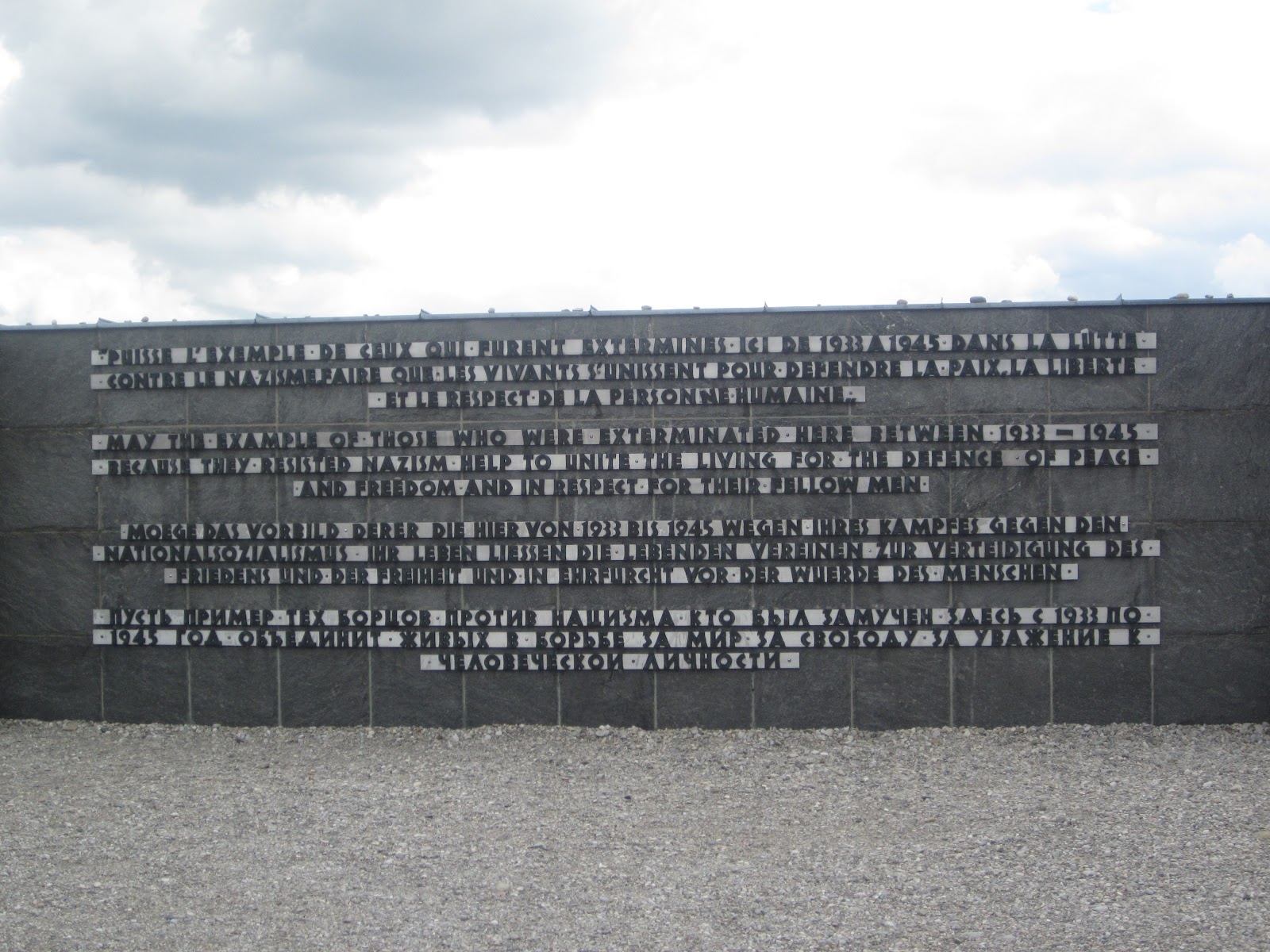
 Christian memorial
 Jewish synagogue memorial


 Words cannot describe the sadness that I felt as I walked through the somber Dachau camp. The hatred of a few changed the lives of so many. My heart will forever remember the pain of Dachau.

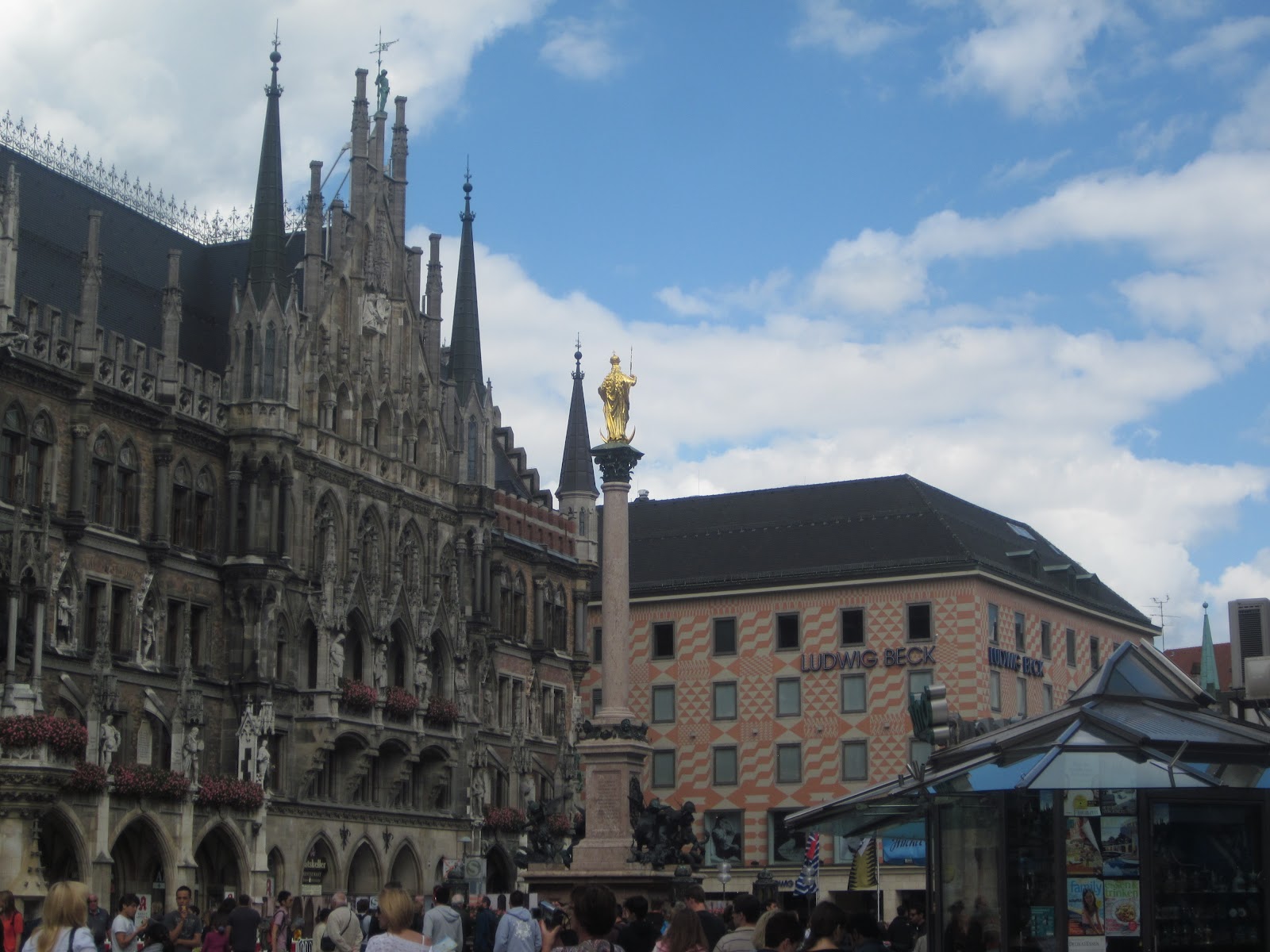
Afterwards, we ventured to downtown Munich for dinner and shopping.
 Don't worry. They have a shrine to MJ on someones statue. I wonder how they feel...
 The Glockenspiel in downtown Munich. PS--it was really cold. I wasn't planning on it being cold in July so my jacket, over a jacket, over a tie-dye dress is not attractive, though it was very necessary.


Hofbrauhaus--largest beirgarten in the US.

Dinner for Chris' birthday!

Germany: Day 8

 On our 8th day in Germany, we took a train to Augsburg. It was a little walled in city created during the Middle Ages. I basically just took this picture for my grandma. She's a little obsessed with lambs. I got an evil look when I sat on it during a looonnnggg guided tour.
 Someone important lived here. Now it's pretty much the equivalent of the European version of H&M. Or so I was told...


 This was Martin Luther's home or place of study or something before he nailed the 95 Theses on the door of the church. Or maybe he went into hiding here. If you can read German, feel free to translate this and report back.

Side note: Let this be a note of the importance of journal writing because I surely don't remember the details 1 month later...

 They had large dogs.
 People could pay 88 Euro cents to live in one of these little places for a year under the Catholic church. It's pretty incredible. All they had to do was go to church. They still live there for the same amount--.88 per year.
 We then went to this fabric museum in Augsburg. They wouldn't let us take pictures inside, but we got to watch how fabrics were developed over a certain period of time. I'm pretty sure that this was actually a work camp, but they didn't talk about that. We looked at a map afterwards of the work camps during WWII and saw that there were four located here. Can't pull that wool over 16 teachers eyes... (wool, fabric factory, get it?).
We ate lots of dessert. Well I did. They drank most of their dessert and I ate two servings. I've never had so much chocolate mousse in my life!! I LOVED this little Italian restaurant.

Germany: Day 7

 On our second day in Munich, we were fortunate enough to visit the Gymnasium Oberhaching. They were such gracious hosts and had an awesome international student program set up. We were able to meet with a whole panel of students who had just returned from living a year abroad in the US and Canada. It was cool to hear their responses. Turns out, teenagers are teenagers, no matter where they are from or what language they speak!

 English class. They had tons of questions.
 Don't worry. In another English class, they were learning some choreography to Katy Perry's "Firework."
 These boys wore leiderhosen to show us because they knew we were coming. It was a little awkward when he turned around to catch me taking a picture of his back side.
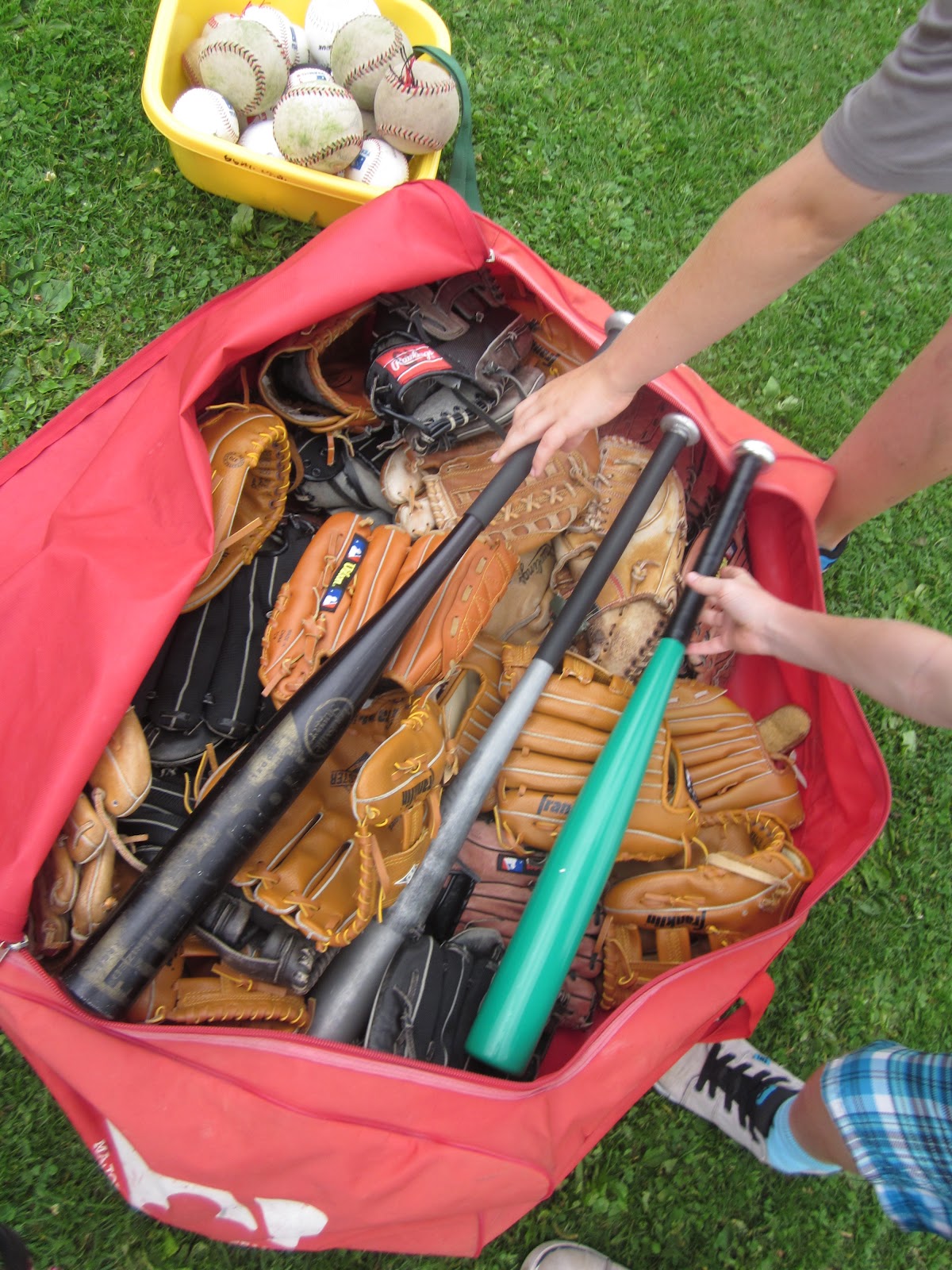
 We taught the European kinds how to play baseball. I didn't realize how much of an American sport baseball truly is. They had NO CLUE how to play it. Shocking.
 We played with them. It was awesome.

 That afternoon, we traveled to the location of the Munich Olympic games. I had no clue how much controversy surrounded those games!
 Blow dryers at their finest. Maybe I should invest in one of these.


 We were conveniently all wearing the Munich games colors. Here is the rainbow of our jackets. It was cold. Very cold. And rainy.
Sigh.

Wednesday, August 15, 2012

Germany: Day 5

 After taking an early morning train to Munich and enjoying the sites, we arrived in our super modern Hotel 1. Complete with TV fish tank, it was just awesome.
 This is the view out my window.
 And the super modern bathroom, which I loved.
 We went do a delicious Brazilian pizza restaurant and enjoyed a quick meal before meeting up with the group.
 So delicious.
 Then, a group of us, decided to deviate from the schedule. Jeff had studied abroad in Salzburg, Austria as an undergrad. He wanted to relive the experience and a few of us wanted another stamp in our passport. Salzburg here we come!
 We skipped out on dinner and a tour and boarded a train to Austria. We lucked out, in that we already each had day passes for the train. We didn't have to pay a cent which saved us tons of Euros.
 The Alps. Beautiful.
 Upon arriving in Salzburg, we ran into these charms. They were wearing the traditional clothing, the Dirndl.
 Austria had a special place in my heart. It was freezing cold, but I loved every second of it. My dad raised us on Sound of Music. Every year, on Christmas Eve, we watch it. As a teenager, I HATED it. But now, Christmas wouldn't be the same without it. I took a few pictures with some things that looked familiar from the Sound of Music set. Loved it. It was beautiful. PS--they run around these statue things when they are singing the "Doe, a deer, a female deer" around the time when they get the clothes made of drapes. FYI :)
 Jeff and Ryan acting out this probably-somewhat-important-statue behind me
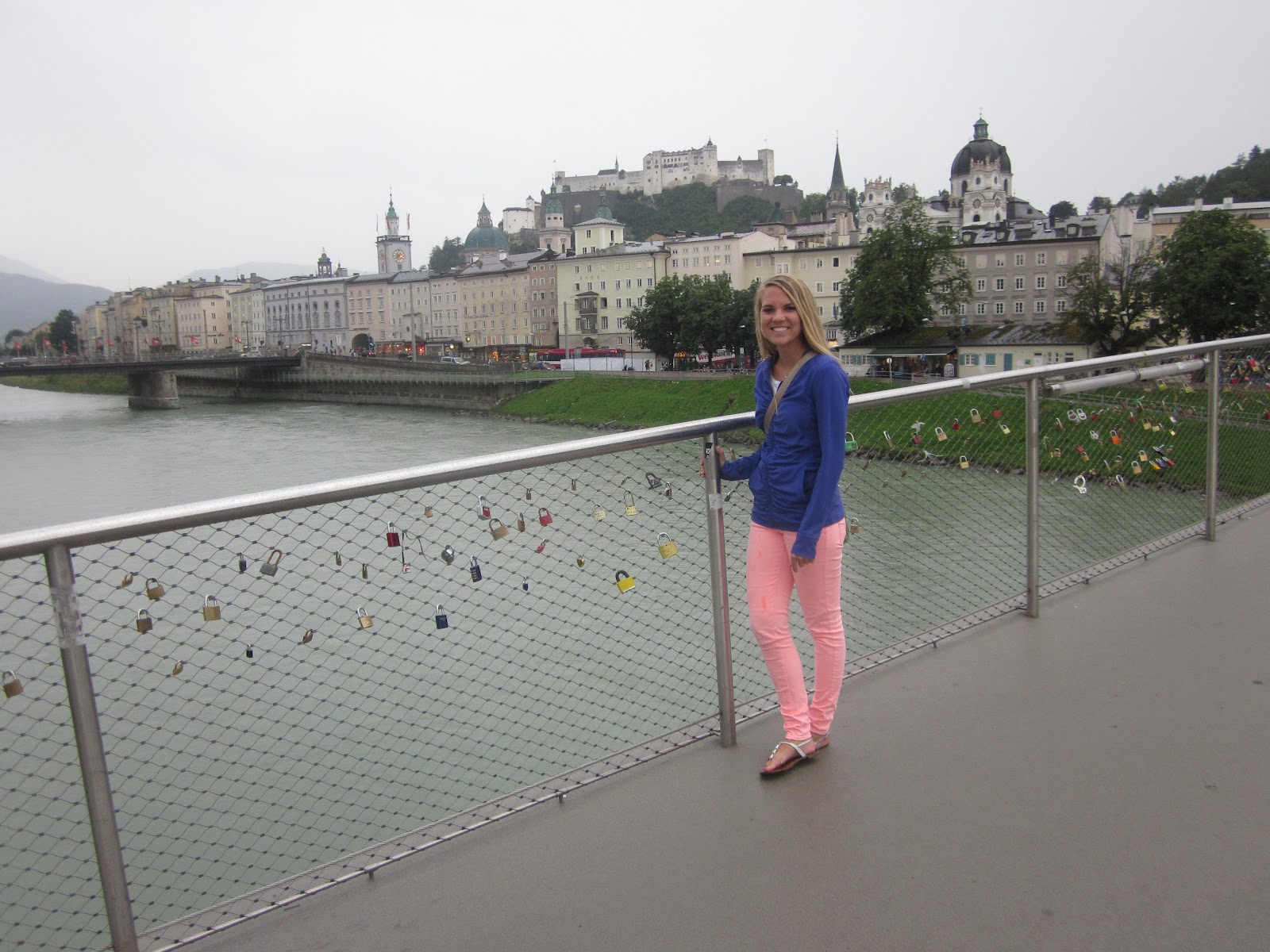
 Next time I go here, I'll be in love and leave a lock. Or maybe I'll go to one of the other 200 bridges in Europe and leave a lock. Mark my words.
 Super cute shopping center. Globalization, here we are!

 Awesome rainbow. We happened to get stuck in a freak rain storm. It left this gem behind.
 Don't worry, we climbed this cliff and ate supper up there at...
 ...this beirgarten. Their beer smelled nasty but the food was DELISH. Chicken cordon bleu and fries. At this point, I was basically loving anything that didn't come from a pig.
 Stormy night sky.
Sarah, Karen, and Elaine. After this, we stocked up on chocolate (CERTAINLY THE BEST I'VE EVER HAD. Note to self: Milka, smores flavor. Sigh. I ate 2 giant bars before coming home. I mean GIANT bars. Like the size they award to a 3rd grade class for selling the most wrapping paper in a fund raiser. It was huge and I ate it alone.).